


Frankincense Frereana, Frankincense Carterii and myrrh are almost always named in the same breath, and just as often confused. In reality they are three distinctly different resins, each with its own botany, chemistry and aroma. We work with all three from a single region: the Cal Madow mountains in northern Somalia. Here is the difference, set out plainly and backed by sources.
Two are frankincense, one is myrrh
The most important point first. Frereana and Carterii are both frankincense, from trees of the Boswellia genus. Myrrh is something else: it comes from the shrub Commiphora myrrha, a genus of its own. All three are only distantly related, through the torchwood family (Burseraceae). So when someone says “frankincense and myrrh”, they mean two different plants, not two grades of the same resin.
At a glance
| Trait | B. frereana | B. carterii | Myrrh |
|---|---|---|---|
| Plant | Boswellia frereana | Boswellia carterii | Commiphora myrrha |
| Somali name | Maydi | Beeyo | Malmal |
| Origin | northern Somalia, Cal Madow | Somalia, East Africa | NE Africa, Arabia |
| Main constituents | monoterpenes, lupeol, amyrins | boswellic acids, α-pinene | furanosesquiterpenes |
| Boswellic acids | practically none | rich, incl. AKBA | different genus |
| Aroma | fresh, citrus-resinous | warm, balsamic | earthy, bitter |
Frereana (Maydi), the “king”
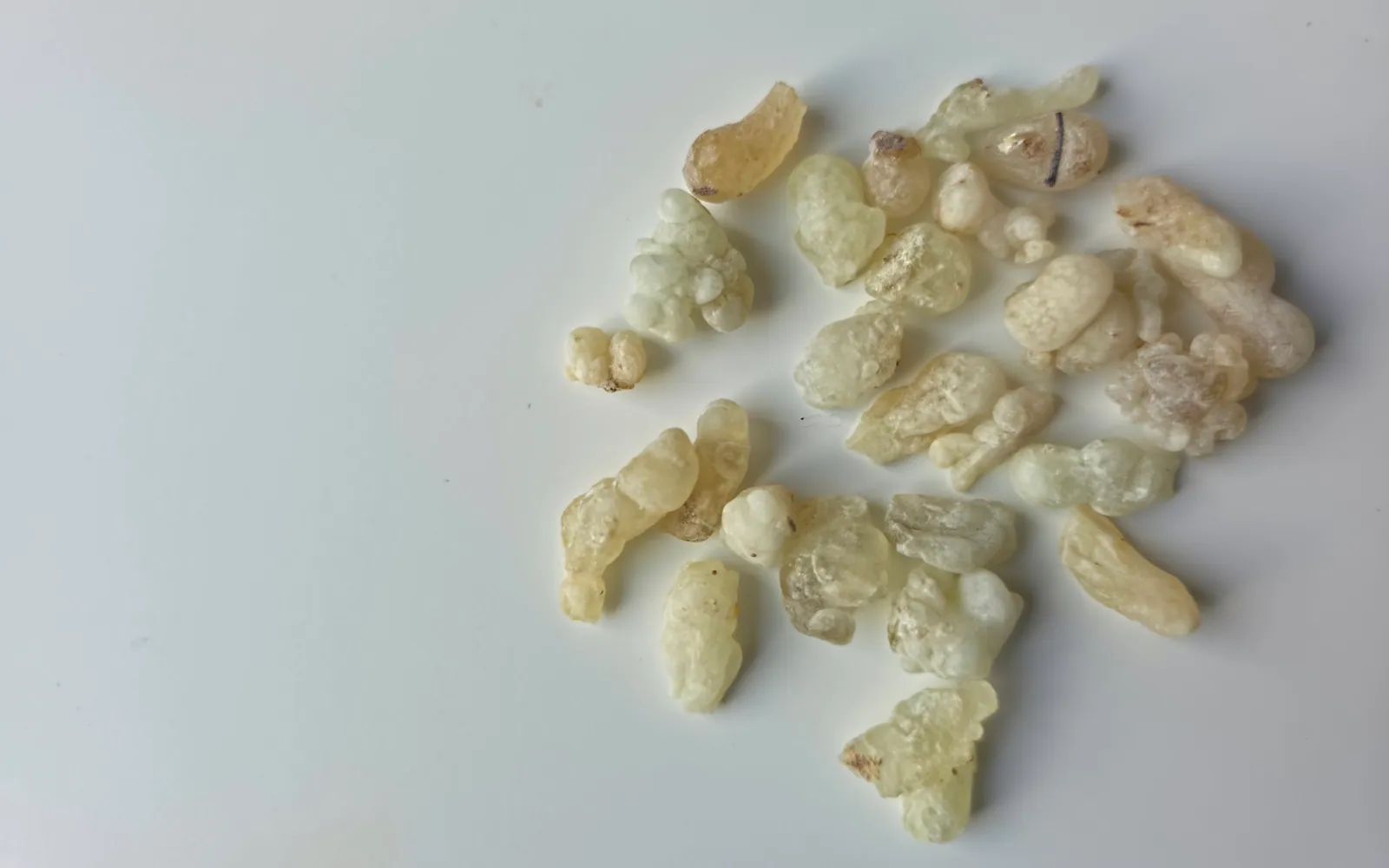
In Somalia, Frereana is called Maydi and is traditionally regarded as the “king of frankincense”. Boswellia frereana grows almost exclusively on the limestone cliffs of northern Somalia, precisely in our region. The resin is pale, yellow to amber, and the aroma is fresh, bright and citrus-pine, clearly lighter than classic frankincense. It is notable botanically: frereana is practically free of boswellic acids and instead rich in monoterpenes and triterpenes such as lupeol and amyrins. Traditionally, Maydi is even chewed as a high-grade natural gum.
Carterii (Beeyo), the classic frankincense
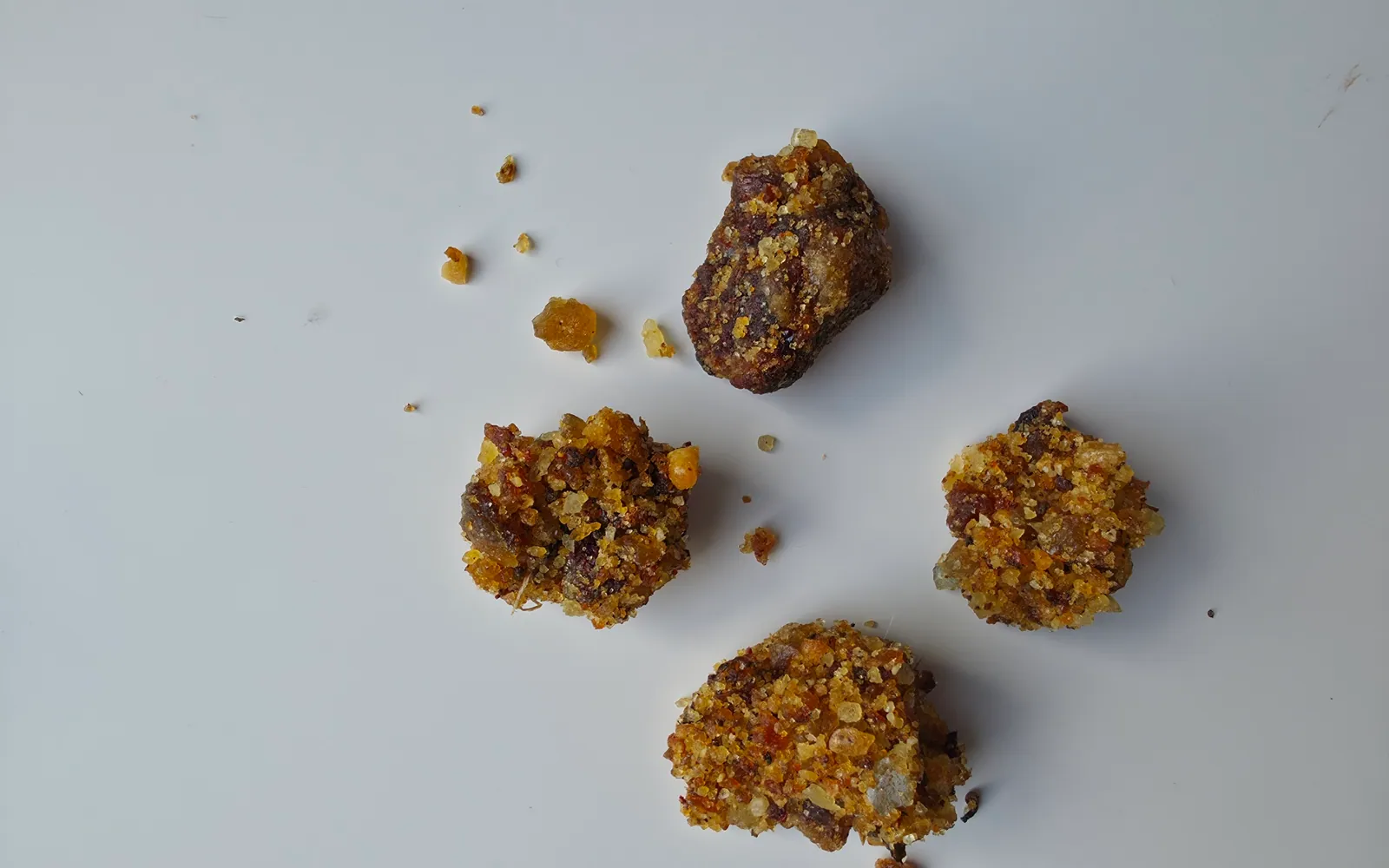
When most people think “frankincense”, they think of Carterii: the warm, balsamic, resinous scent of incense and aromatherapy. Boswellia carterii is the best-researched frankincense species and is often equated in the literature with Boswellia sacra from Oman. Unlike Frereana, Carterii is rich in boswellic acids, pentacyclic triterpenic acids such as AKBA. Its aroma is deeper and rounder than Frereana’s, less citrusy, more warm, sweet-resinous wood.
Myrrh (Malmal), the dark counterpart
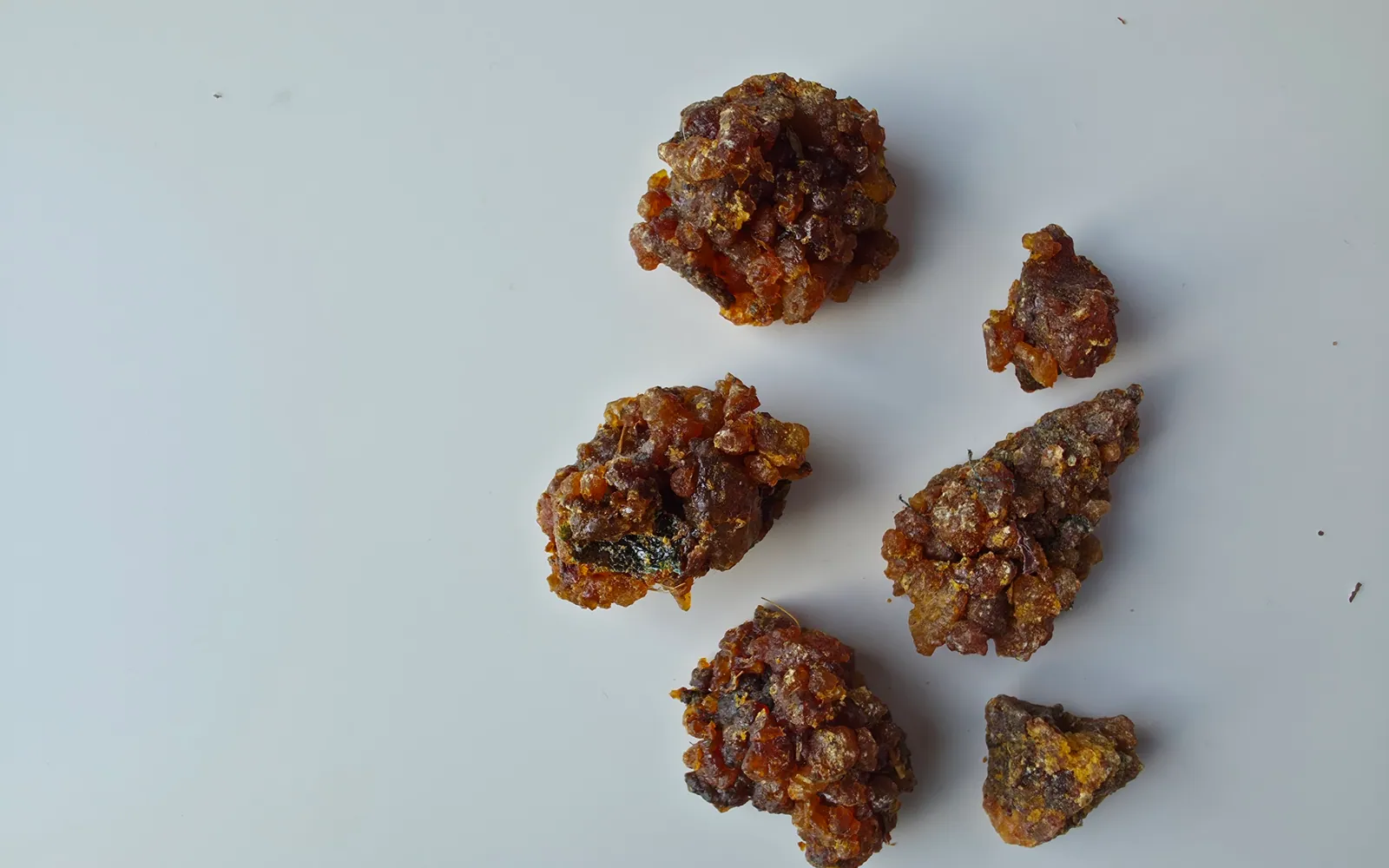
Myrrh is the contrast to both frankincense types. The resin is reddish-brown, the aroma earthy, bitter, faintly smoky and heavy, darker and more medicinal in impression. Botanically it comes from the thorny shrub Commiphora myrrha of northeastern Africa and the Arabian Peninsula. Historically, myrrh is one of the oldest trade goods of all.
The decisive difference: chemistry
The central chemical difference concerns the boswellic acids. B. carterii contains these pentacyclic triterpenic acids (including AKBA) in abundance, whereas B. frereana is, according to phytochemical analyses, largely free of them and instead carries monoterpenes and triterpenes such as lupeol and amyrins. Myrrh differs fundamentally: its essential oil is dominated by furanosesquiterpenes, above all furanoeudesma-1,3-diene, curzerene and lindestrene. These constituent profiles are documented by analyses such as HPLC-MS/MS and GC-MS (see sources).
Use and application
- Frereana (Maydi): traditionally as a high-grade chewing gum, as an incense resin with a fresh note, and in natural cosmetics.
- Carterii (Beeyo): classic incense, aromatherapy, and the subject of numerous phytochemical studies on boswellic acids.
- Myrrh (Malmal): traditionally in oral and dental care, as incense, and as a base note in perfumery.
Which type is “the right one” comes down to aroma and intended use. Many people value the interplay: the freshness of Frereana, the warmth of Carterii and the depth of myrrh. With natural resins, origin shapes character, much like wine or coffee. That is exactly why we focus on one region rather than many sources: the Cal Madow, home of Maydi. If you want to be involved early, as a buyer, reseller or simply curious, get in touch or join the waiting list.
Frequently asked questions
What is the difference between Boswellia frereana and Boswellia carterii?
Boswellia carterii is rich in boswellic acids, pentacyclic triterpenic acids such as AKBA. Boswellia frereana, by contrast, is practically free of α- and β-boswellic acids and is instead rich in monoterpenes and triterpenes such as lupeol and amyrins.
Does Boswellia frereana contain boswellic acids?
Largely not, according to phytochemical analyses. Frereana is largely free of the characteristic α- and β-boswellic acids, which clearly sets it apart from Boswellia carterii and Boswellia sacra.
Is myrrh the same as frankincense?
No. Frankincense comes from trees of the Boswellia genus, while myrrh comes from the shrub Commiphora myrrha. Myrrh essential oil is dominated by furanosesquiterpenes such as furanoeudesma-1,3-diene, curzerene and lindestrene.
Which type has the freshest aroma?
Frereana, known locally as Maydi: fresh, bright and citrus-pine. Carterii is warmer and more balsamic, myrrh earthy and bitter.
Sources
- 01 Schmiech M. et al. (2019). Comparative Analysis of Pentacyclic Triterpenic Acid Compositions in Boswellia species. Molecules 24(11):2153.
- 02 Johnson S. et al. (2021). The Chemical Composition of Single-Tree Boswellia frereana Resin Samples. Natural Product Communications.
- 03 Huang F. (2022). Review of the Chemical Composition and Pharmacological Effects of Boswellia carterii. Evidence-Based Complementary and Alternative Medicine.
- 04 Germano A. et al. (2017). Bioactive Constituents and Analgesic Effects of Commiphora myrrha (MyrLiq).
This article describes botany, constituents (per published phytochemical analyses), origin and tradition. It makes no medical or health claims.
© Farah Duale

